
REGISTRO DOI: 10.69849/revistaft/ra10202509071604
Talyta Padrão Eiras
Abstract
Angel investors play a critical role in the development of startups, offering not only financial resources but also expertise, mentorship, and access to valuable networks. This article examines how entrepreneurs can identify and engage the right angel investors to enhance business management and growth. It emphasizes the importance of aligning investor experience with startup needs, leveraging mentorship for strategic guidance, and utilizing investor networks for market expansion and credibility. The study highlights that the contribution of angel investors extends beyond capital, fostering professionalization, operational efficiency, and long-term business success.
Keywords: Angel investors; Business management; Startups; Mentorship; Networking; Entrepreneurial growth; Early-stage financing.
Angel investors play a pivotal role in the early stages of startups, providing not only financial capital but also mentorship, industry expertise, and valuable networks. For entrepreneurs, securing an angel investor can be transformative, offering strategic guidance and connections that enhance business management and growth (Sørheim & Botelho, 2016). By engaging with experienced investors, startups gain access to knowledge and best practices that are often unavailable through other funding sources (Aliaga-Isla, 2014).
Angel investors are typically high-net-worth individuals who invest their personal funds into startups in exchange for equity ownership (McKaskill, 2009). Unlike venture capitalists, angel investors often engage more closely with the companies they invest in, providing guidance and leveraging their networks to support the startup’s development (Granz et al., 2019). This involvement can significantly improve strategic planning, operational efficiency, and market expansion (Ramadani, 2012).
To attract the right angel investor, entrepreneurs should first identify individuals whose expertise aligns with their business needs. Researching potential investors through platforms such as AngelList, attending industry-specific conferences, and participating in pitch competitions can help identify suitable candidates (Tenca & Zambon, 2019). Approaching investors whose experience and interests match the startup’s industry and growth stage ensures a mutually beneficial partnership.
Once potential investors are identified, entrepreneurs should prepare a compelling pitch that highlights not only the business opportunity but also how the investor’s experience and network can add value. Demonstrating a clear understanding of the business model, market potential, and operational needs instills confidence in investors. Moreover, showcasing a willingness to leverage the investor’s expertise and connections increases the likelihood of investment (Lange, Rezepa, & Zatrochová, 2024).
Engaging with an angel investor goes beyond securing funding; it involves building a collaborative relationship. Entrepreneurs should actively seek advice, be open to constructive criticism, and utilize the investor’s network to forge strategic partnerships and customer relationships (Chen & Wu, 2022). Such collaborations can lead to improved business management practices, better decision-making, and accelerated growth (Mason & Harrison, 2016).
In addition, angel investors often provide credibility to startups, helping to attract additional investors and strategic partners. Their reputation and prior successes can reassure other stakeholders about the startup’s potential (Sørheim, 2003). This signaling effect can be particularly important in highly competitive or innovation-driven industries, where trust and validation are critical.
Angel investors also serve as mentors, guiding entrepreneurs through challenges related to governance, financial management, and human resources (Ramadani, 2012). Their practical experience allows startups to avoid common pitfalls and adopt efficient management strategies. For many founders, this guidance is as valuable as the financial contribution itself.
Another critical contribution of angel investors is facilitating access to networks of customers, suppliers, and industry experts. These networks can accelerate market entry, enable strategic partnerships, and support international expansion (Lange, Rezepa, & Zatrochová, 2024). Startups that leverage these connections can gain a competitive advantage that goes beyond initial funding.
Finally, the involvement of angel investors can help startups professionalize their operations, improving transparency, reporting, and accountability. Investors often require regular updates and strategic reviews, which encourage the adoption of structured management processes (Granz et al., 2019). This professionalization is crucial for scaling the business and preparing for subsequent funding rounds or exits.
This flowchart illustrates the pathway through which angel investors contribute to startup success. It begins with the entrepreneur’s need for funding and support, followed by the identification of suitable angel investors whose expertise aligns with the startup’s industry. Once a compelling pitch is delivered, investor engagement leads to financial backing, mentorship, and access to networks. These contributions enhance business management through improved strategic planning, operational efficiency, and governance, while also facilitating market expansion and partnerships. Ultimately, angel investors provide credibility and foster professionalization, driving sustainable long-term growth.
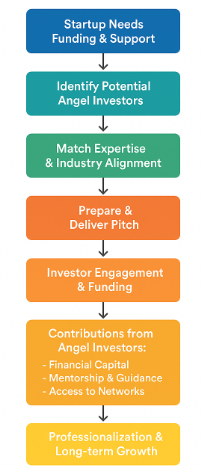
Figure 1. Flowchart of Angel Investors’ Contribution to Startup Success.
Source: Created by author.
In conclusion, angel investors provide more than financial support; they bring expertise, mentorship, credibility, and networks that significantly enhance business management. By carefully selecting investors whose skills and experience align with the startup’s needs, and by fostering collaborative relationships, entrepreneurs can leverage these partnerships to drive sustainable growth, innovation, and long-term success (Aliaga-Isla, 2014; Tenca & Zambon, 2019).
References
Aliaga-Isla, R. (2014). The Role of Business Angels in the Early-Stage Financing of Startups. MDPI.
Chen, J., & Wu, A. (2022). Research Finds Angel Investor Behavior Can Be Influenced by Ego. UNH Today.
Granz, J., Lévesque, M., & Shepherd, D. A. (2019). Business Angels and Early Stage Decision Making Criteria. Journal of Business Venturing Insights, 12, e00143.
Lange, J., Rezepa, S., & Zatrochová, M. (2024). The Role of Business Angels in the Early-Stage Financing of Startups: A Systematic Literature Review. Administrative Sciences, 14(10), 247.
Mason, C. M., & Harrison, R. T. (2016). The Role of the Exit in the Initial Screening of Investment Opportunities: The Case of Business Angel Syndicate Gatekeepers. International Small Business Journal, 34(2), 157-175.
McKaskill, T. (2009). An Introduction to Angel Investing. Angel Capital Association.
Ramadani, V. (2012). The Importance of Angel Investors in Financing the Growth of Small and Medium-Sized Enterprises. International Journal of Academic Research in Business and Social Sciences, 2(7), 306-314.
Sørheim, R. (2003). The Pre-Investment Behaviour of Business Angels: A Social Capital Approach. Venture Capital: An International Journal of Entrepreneurial Finance, 5(4), 337-364.
Sørheim, R., & Botelho, T. (2016). Handbook of Research on Business Angels. Edward Elgar Publishing.
Tenca, F., & Zambon, S. (2019). Matching Startups with Business Angels: Strategies and Best Practices. International Journal of Entrepreneurship and Small Business, 38(2), 234-250.
Pessoa, E. G. (2024). Pavimentos permeáveis uma solução sustentável. Revista Sistemática, 14(3), 594–599. https://doi.org/10.56238/rcsv14n3-012
Pessoa, E. G. (2024). Pavimentos permeáveis uma solução sustentável. Revista Sistemática, 14(3), 594–599. https://doi.org/10.56238/rcsv14n3-012
Eliomar Gotardi Pessoa, & Coautora: Glaucia Brandão Freitas. (2022). ANÁLISE DE CUSTO DE PAVIMENTOS PERMEÁVEIS EM BLOCO DE CONCRETO UTILIZANDO BIM (BUILDING INFORMATION MODELING). Revistaft, 26(111), 86. https://doi.org/10.5281/zenodo.10022486
Eliomar Gotardi Pessoa, Gabriel Seixas Pinto Azevedo Benittez, Nathalia Pizzol de Oliveira, & Vitor Borges Ferreira Leite. (2022). ANÁLISE COMPARATIVA ENTRE RESULTADOS EXPERIMENTAIS E TEÓRICOS DE UMA ESTACA COM CARGA HORIZONTAL APLICADA NO TOPO. Revistaft, 27(119), 67. https://doi.org/10.5281/zenodo.7626667
Eliomar Gotardi Pessoa, & Coautora: Glaucia Brandão Freitas. (2022). ANÁLISE COMPARATIVA ENTRE RESULTADOS TEÓRICOS DA DEFLEXÃO DE UMA LAJE PLANA COM CARGA DISTRIBUÍDA PELO MÉTODO DE EQUAÇÃO DE DIFERENCIAL DE LAGRANGE POR SÉRIE DE FOURIER DUPLA E MODELAGEM NUMÉRICA PELO SOFTWARE SAP2000. Revistaft, 26(111), 43. https://doi.org/10.5281/zenodo.10019943
Pessoa, E. G. (2025). Optimizing helical pile foundations: a comprehensive study on displaced soil volume and group behavior. Brazilian Journal of Development, 11(4), e79278. https://doi.org/10.34117/bjdv11n4-047