
REGISTRO DOI: 10.69849/revistaft/ra10202509071616
Bruna Marques Valim Faria
Abstract
Falls represent a major public health concern among older adults, often leading to injuries, loss of independence, and increased healthcare costs. Evidence from randomized controlled trials and systematic reviews consistently demonstrates that physical activity programs focusing on balance and muscle strengthening are effective in reducing the incidence of falls and improving functional mobility in elderly populations. Interventions such as the Otago Exercise Programme, Tai Chi, and community-based initiatives like Stepping On highlight the feasibility and scalability of adapted protocols tailored to the needs and abilities of older individuals. Beyond fall prevention, these programs improve gait speed, postural stability, confidence, and daily functional capacity, thereby enhancing quality of life and supporting independent living. The findings underscore the importance of implementing evidence-based, progressive, and community-delivered exercise interventions as integral strategies in geriatric health promotion and fall prevention policies.
Keywords: Falls prevention; Physical activity; Older adults; Balance training; Muscle strengthening; Functional mobility; Community programs; Healthy aging.
Physical activity is a cornerstone of healthy aging, and a substantial and convergent literature demonstrates that appropriately designed exercise programs reduce fall risk and improve daily functional mobility among older adults. Falls are common and consequential in later life: roughly one-third of community-dwelling adults aged 65 and older experience at least one fall per year, and falls account for considerable morbidity, loss of independence, and health-care costs. Randomized trials and systematic reviews consistently show that interventions emphasizing balance-challenging exercises together with progressive strength training are the most effective strategies for lowering the rate and risk of falls in community-dwelling older people. Meta-analytic evidence indicates that exercise reduces the rate of falls by around 20–30%, with balance-focused and combined balance-plus-strength programs producing the largest effects (Sherrington et al., 2019; Sherrington et al., 2020).
Mechanistically, the protective effects of exercise against falls arise from improvements in the physiological domains that underpin safe mobility: lower-limb muscle strength, postural control, reaction speed, gait stability, and confidence while performing daily tasks. Resistance training targeted to the major lower-extremity muscle groups increases the force-generating capacity needed for sit-to-stand transfers and for arresting a trip, while balance-focused activities such as tandem stance, single-leg stance, perturbation training, dynamic weight-shifting and obstacle negotiation improve sensory-motor integration and anticipatory as well as reactive postural adjustments. Programs that combine progressive resistance with task-specific functional and balance challenges therefore address both the muscular and neural contributors to instability and yield greater reductions in fall incidence than unimodal, low-dose activities (Campbell et al., 1997; Sherrington et al., 2019).
Translation of these principles into safe, feasible clinical and community protocols requires age- and ability-appropriate adaptation. Evidence-based models such as the Otago Exercise Programme and structured Tai Chi interventions exemplify how standardized, scalable protocols can be modified for older populations while preserving core therapeutic ingredients. The Otago programme—delivered individually or in groups—uses progressive strength and balance exercises plus a walking plan, tailored to baseline ability and advanced over 6–12 months; randomized and implementation studies show durable improvements in gait, lower-limb strength, and reductions in falls among at-risk community dwellers (Robertson et al., 2002). Similarly, randomized controlled trials of supervised Tai Chi have demonstrated reductions in fall numbers, improved functional balance scores, and decreased fear of falling, particularly in otherwise sedentary older adults (Li et al., 2005). These programmatic examples highlight that community delivery is both effective and practical when fidelity to intensity and progression is maintained.
Practical protocol elements supported by guideline bodies and systematic reviews converge on several consistent recommendations: including balance-challenging exercises performed at least two to three times per week, progressive resistance training for lower-limb muscles at least twice weekly, a minimum “dose” of exercise sufficient to produce adaptation, and tailoring progression to individual baseline mobility while monitoring safety and adherence. The World Health Organization (2020) emphasizes balance and coordination activities on three or more days per week for those with poor mobility, alongside muscle-strengthening activities to reduce falls and preserve independence.
Community programs that operationalize these elements have demonstrated population-level impact. The “Stepping On” program, a community-based small-group workshop originally developed and trialed in Australia, combines education, skill rehearsal, and progressive exercises and has been associated with approximately a 30% reduction in falls in randomized evaluations; subsequent scale-up studies show maintained effectiveness when instructor training and program fidelity are preserved (Clemson et al., 2004). Public health toolkits further document how communities can adopt evidence-based programs by designing recruitment pathways, training facilitators, and embedding monitoring systems to ensure outcomes similar to those in trials.
Beyond reduction in fall incidence, exercise protocols produce meaningful gains in everyday mobility and independence. Outcomes in trials include faster gait speed, improved timed-up-and-go performance, increased chair-stand repetitions, better balance test scores, and self-reported improvements in confidence and ability to perform activities of daily living. These functional gains translate into fewer activity limitations, reduced fear-related avoidance that otherwise accelerates deconditioning, and preserved capacity for community participation—critical outcomes from both clinical and public-health perspectives (Sherrington et al., 2019; Robertson et al., 2002).
The flowchart illustrates the logical structure of the article by showing how falls are a common problem among older adults and how appropriately designed exercise programs can effectively reduce fall risk and improve functional mobility. It highlights that the most effective interventions combine balance-challenging activities with progressive strength training, which enhance underlying physiological mechanisms such as muscle strength, postural control, and gait stability. Finally, it points to evidence-based community programs such as the Otago Exercise Programme, the Stepping On program, and structured Tai Chi as practical, scalable models for implementing these strategies in real-world settings.
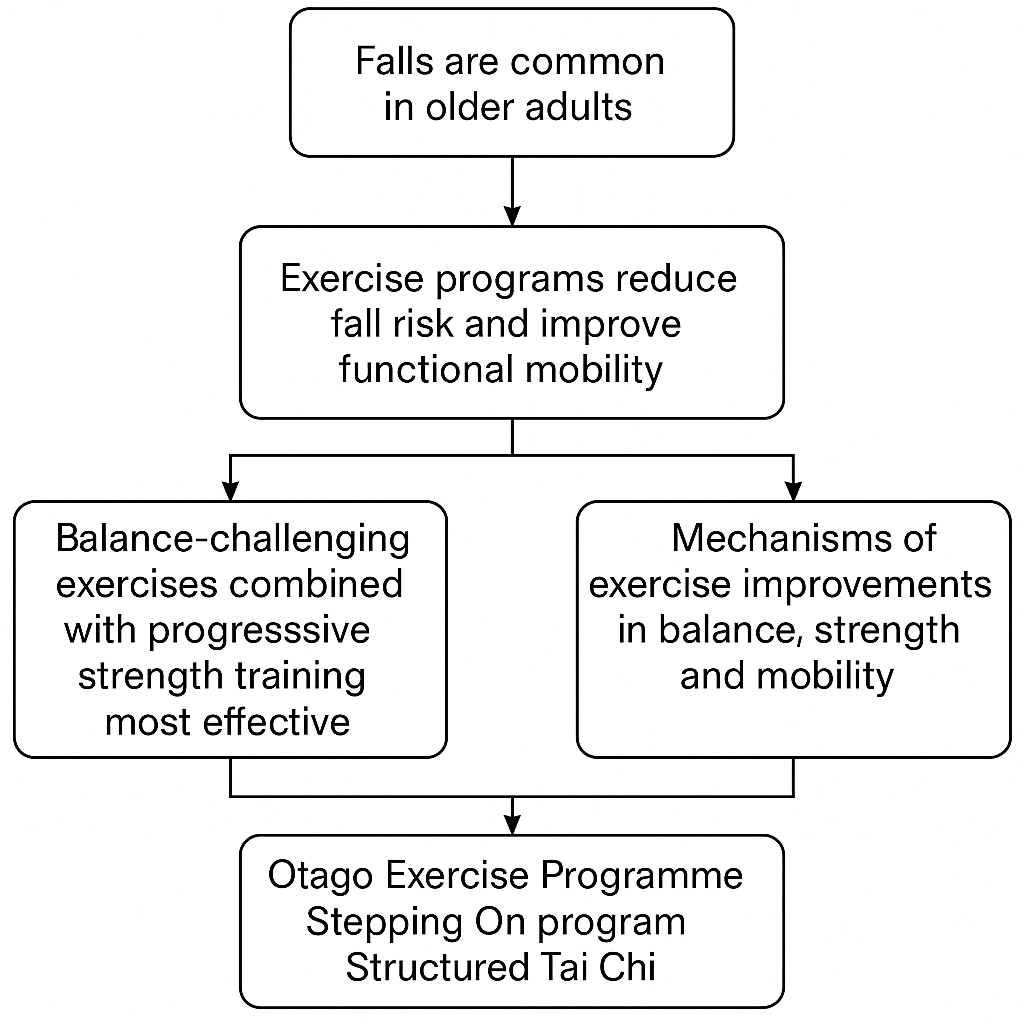
Figure 1. Evidence-Based Exercise Programs for Fall Prevention and Mobility Improvement in Older Adults.
Source: Created by author.
In conclusion, robust evidence supports the use of structured, progressive exercise programs—particularly those that combine balance training and lower-limb strengthening—to prevent falls and improve functional mobility in older adults. Community-delivered models such as Otago and Stepping On, and structured group modalities including Tai Chi, provide practical templates for implementation. For clinicians, public health practitioners, and community organizations, the priority is to offer accessible programs that are evidence-based, tailored, and delivered with fidelity so that the well-documented benefits for fall prevention and daily function can be realized at scale.
References
Campbell, A. J., Robertson, M. C., Gardner, M. M., Norton, R. N., & Buchner, D. M. (1997). Falls prevention over 2 years: A randomized controlled trial in women 80 years and older. Age and Ageing, 26(6), 421–429.
Clemson, L., Cumming, R. G., Kendig, H., Swann, M., Heard, R., & Taylor, K. (2004). The effectiveness of a community-based program for reducing the incidence of falls in the elderly: A randomized trial. Journal of the American Geriatrics Society, 52(9), 1487–1494.
Li, F., Harmer, P., Fisher, K. J., McAuley, E., Chaumeton, N., Eckstrom, E., & Wilson, N. L. (2005). Tai Chi and fall reductions in older adults: A randomized controlled trial. Journal of Gerontology: Medical Sciences, 60A(2), 187–194.
Robertson, M. C., Devlin, N., Gardner, M. M., & Campbell, A. J. (2002). Effectiveness and economic evaluation of a nurse-delivered home exercise program to prevent falls. 1: Randomized controlled trial. BMJ, 322(7288), 697–701.
Sherrington, C., Fairhall, N. J., Wallbank, G. K., Tiedemann, A., Michaleff, Z. A., Howard, K., … & Whitney, J. (2019). Exercise for preventing falls in older people living in the community. Cochrane Database of Systematic Reviews, 2019(1), CD012424.
Sherrington, C., Michaleff, Z. A., Fairhall, N., Paul, S. S., Tiedemann, A., Whitney, J., … & Clemson, L. (2020). Exercise to prevent falls in older adults: An updated systematic review and meta-analysis. British Journal of Sports Medicine, 54(11), 885–891.
World Health Organization. (2020). WHO guidelines on physical activity and sedentary behaviour. Geneva: WHO.
Pessoa, E. G. (2024). Pavimentos permeáveis uma solução sustentável. Revista Sistemática, 14(3), 594–599. https://doi.org/10.56238/rcsv14n3-012
Pessoa, E. G. (2024). Pavimentos permeáveis uma solução sustentável. Revista Sistemática, 14(3), 594–599. https://doi.org/10.56238/rcsv14n3-012
Eliomar Gotardi Pessoa, & Coautora: Glaucia Brandão Freitas. (2022). ANÁLISE DE CUSTO DE PAVIMENTOS PERMEÁVEIS EM BLOCO DE CONCRETO UTILIZANDO BIM (BUILDING INFORMATION MODELING). Revistaft, 26(111), 86. https://doi.org/10.5281/zenodo.10022486
Eliomar Gotardi Pessoa, Gabriel Seixas Pinto Azevedo Benittez, Nathalia Pizzol de Oliveira, & Vitor Borges Ferreira Leite. (2022). ANÁLISE COMPARATIVA ENTRE RESULTADOS EXPERIMENTAIS E TEÓRICOS DE UMA ESTACA COM CARGA HORIZONTAL APLICADA NO TOPO. Revistaft, 27(119), 67. https://doi.org/10.5281/zenodo.7626667
Eliomar Gotardi Pessoa, & Coautora: Glaucia Brandão Freitas. (2022). ANÁLISE COMPARATIVA ENTRE RESULTADOS TEÓRICOS DA DEFLEXÃO DE UMA LAJE PLANA COM CARGA DISTRIBUÍDA PELO MÉTODO DE EQUAÇÃO DE DIFERENCIAL DE LAGRANGE POR SÉRIE DE FOURIER DUPLA E MODELAGEM NUMÉRICA PELO SOFTWARE SAP2000. Revistaft, 26(111), 43. https://doi.org/10.5281/zenodo.10019943
Pessoa, E. G. (2025). Optimizing helical pile foundations: a comprehensive study on displaced soil volume and group behavior. Brazilian Journal of Development, 11(4), e79278. https://doi.org/10.34117/bjdv11n4-047