
REGISTRO DOI: 10.69849/revistaft/ar10202507262126
Glícia Maria de Almeida¹
Joashllenny Alves de Oliveira²
ABSTRACT: Curraleiro Pé-Duro is a native bovine found in Central-West and Northeast regions of Brazil. They originated from Bos taurus ibericus acquiring robust phenotypes that allow them to adapt and survive in semiarid region. For the past decades, they have been interbreeding with exotic breeds attempting to increase their economic production. Unfortunately, this strategy produced genomic contamination leading Curraleiro Pé-Duro to risk of extinction. In this study, we aim to evaluate three non-evasive DNA extraction protocols to access genetic diversity of Curraleiro Pé-Duro. First, we tested well-known protocols to extract DNA from hair follicle. Second, we validated the performance using genomic and mitochondrial primers. Then, we confirm that these genome was accessed by ISSR (Inter Simple Sequence Repeat). We found had the best results was obtain by adding Proteinase K to the Chelex reagent, protocol III. In addition, we found that among twenty nine ISSR primers, five of them, successfully generated consistent and reliable polymorphism to access the genetic diversity in this native bovine.
KEYWORDS: genetic studies; ISSR primers; molecular markers; native cattle; polymorphism
INTRODUCTION
Genetic diversity is essential for economic and social developed worldwide. When properly managed they will support human activities in a sustainable manner (GOLLIN, 2020). In the past years, species have been extinguished and genes have been lost due to environmental disasters, interbreeding, and lack management (ARGUMEDO et al., 2021). It is crucial to preserve and protect Animal Genetic Resources (AnGR) against damage and genetic erosion.
In South America, bovine were integrated into variety of environments by Spanish and Portuguese conquers. So far, it has not been found a single report of cattle inhabiting Brazil before the colonization period (ARGUMEDO et al., 2021; QUEIROZ; CARVALHO; SANTOS, 2020). Brazilian cattle species belong to Bos taurus, with a complex genetic formation composed by Bos taurus ibericus, Bos taurus aquitanicus e Bos taurus batavicus (CARVALHO et al., 2013; VIEIRA et al., 2022). All these species were abundant in Portugal during the XVI century (QUEIROZ; CARVALHO; SANTOS, 2020). Consequently, Brazilian native cattle arose from the combination of these three genetic sources. Curraleiro Pé-Duro is one of many native cattle in Brazil that is adapted to semiarid region (CARVALHO et al., 2013; QUEIROZ; CARVALHO; SANTOS, 2020).
Although, the mechanism by which environmental factors affected genome of the native livestock remain unclear, it is well known that food, weather and parasites are able to control genes expression in many organisms (BARBOSA et al., 2023; CARVALHO et al., 2013; VIEIRA et al., 2022). Exogenous factors impact the genome by promoting changes in the nucleic bases leading to silent or no-silent mutations. Some of these changes can have economic benefits, such as double muscling (MACEDO et al., 2025) where the animal develop extramuscles. Moreover, the changes in the genome lead to polymorphism, which produce the genetic diversity found in all living organims.
Environmental, social, economic and political factors impact livestock sector (FENDERSON; KOVACH; LLAMAS, 2020) and direct affect the native livestock, which has decreased in number due to interbreeding with exotic bovine to attempt a high productive profile. Analyses of specific threats faced by particular livestock, and some of the reasons that leaded to populations extinctions were mainly caused by interbreeding, genetic contamination, loss of habitat, diseases, and lack of sustained breeding managements, lack of legislations (ARGUMEDO et al., 2021).
The prior action in for livestock preservation and genetic management is the genetic investigation of current diversity in the population (ALMEIDA, 2011; FREITAS et al., 2022). For this purpose, genome analysis is critical step and high quality DNA is required to draw the proper interpretations. Therefore, our aim was first to evaluate three non-evasive DNA extraction protocols to access genetic diversity of Curraleiro Pé-Duro and validate whether ISSR markers are able to access this genetic variability.
MATERIAL AND METHODS
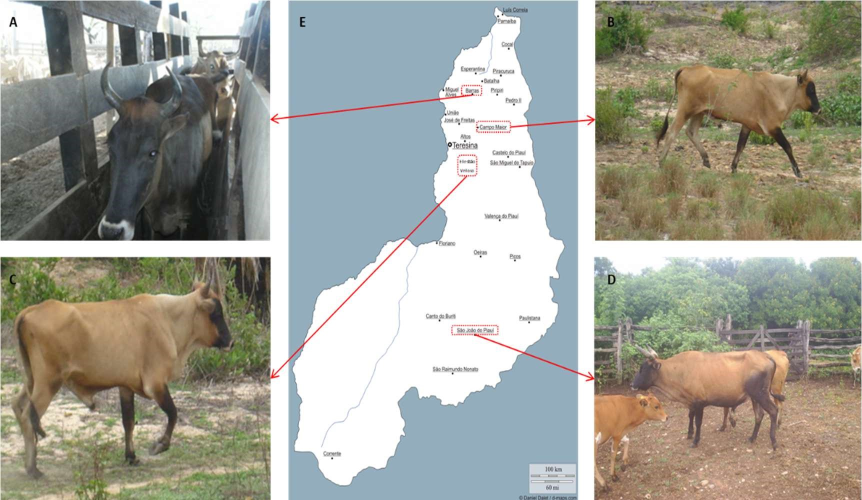
Biological material: We collected samples from 364 animal in four different populations in Piauí State (Figure 1): (i) 84 samples were collected at Faveira farm in Elesbão Veloso city (06º12’07” LS; 42º08’25” WL), composing the population I; (ii) 94 samples were colleted at Tocaia farm in Campo Maior city (04º49’40” SL; 42º10’07” WL), making the population II; (iii) 82 samples were collected at Convencido farm in Barras city (04º14’49” SL; 42º17’45” WL) making population III; and (iv) 104 samples were collected at Octavio Domingos farm in São João do Piauí city (08º22’29” SL; 42º15’48” WL), composing our population IV. The hair from animals tails were storage in envelopes at room temperature before DNA extraction.
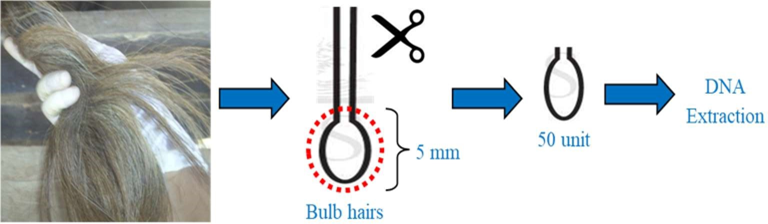
Non-invasive DNA extraction: DNA was extracted from glandular epithelium located in the base of the hair bulb (Figure 2). Hairs were storage in envelops and transferred to Molecular Biology and Laboratory of Biology Molecular and Biotechnology, in EMBRAPA Mid-North, Piauí State. We tested three protocols for non-invasive method. For all of them the hair`s bulb were cut about 5 mm lengths from the base.
(i) Protocol I, used cetyltrimethylammonium bromide (CTAB) method based on ionic detergent hexadecyltrimethylammonium bromide and chloroform-isoamyl alcohol, popular for plant DNA extraction (TAMARI; HINKLEY; RAMPRASHAD, 2013). Each sample were treated with 400 μl CTAB isolation buffer (2% hexadecyltrimethylammonium bromide, 1.4 M NaCl, 0.2% β2-ME, 20 mM EDTA, 100 mM Tris-HCl, pH 8.0) were placed into a 1.5 ml microcentrifuge tube, and incubated at 60°C for 15 min with occasional mixing, and then 400 μl chloroform/isoamyl alcohol (24:1 v/v) was added to each sample. The sample was vortexed briefly and then centrifuged for 5 min (minutes) at 14.000 rpm for 10 min. The supernatant was transferred to a new 1.5 ml Eppendorf tube, 300 μl ice-cold isopropanol was added to the tube, and the tube was inverted 5 times to precipitate the nucleic acid. The sample was centrifuged at 14.000 rpm for 5 min and the supernatant was discarded. The pellet was air-dried for 2 hours and then resuspended in 100 μl of Ultrapure water;
(ii) Protocol II, used Chelex 100 chelating resin have been developed for extracting DNA from forensic-type samples for use with the PCR and passed out uses of toxic solvents (WALSH; METZGER; HIGUCHI, 1991); and
(iii) Protocol III, which was Chelex (WALSH; METZGER; HIGUCHI, 1991) enriched with Proteinase K in final concentration 20 mg/ml. Samples were placed into a 1.5 ml Eppendorf, and added 200 µL mixed vigorously and incubated at 55ºC for 12 hours. After this period samples were centrifuged at 1.4000 rpm for 3 min. The supernatants were collected and transferred to new Eppendorf and storage in -20ºC. We measured DNA using spectrophotometer.
ISSR selection and analysis: We tested twenty-nine ISSR markers to select the one with potential for generating abundant polymorph (Table 1).
Table 1. The Inter Simple Sequence Repeats (ISSR) tested to analyze Curraleiro Pé-Duro populations
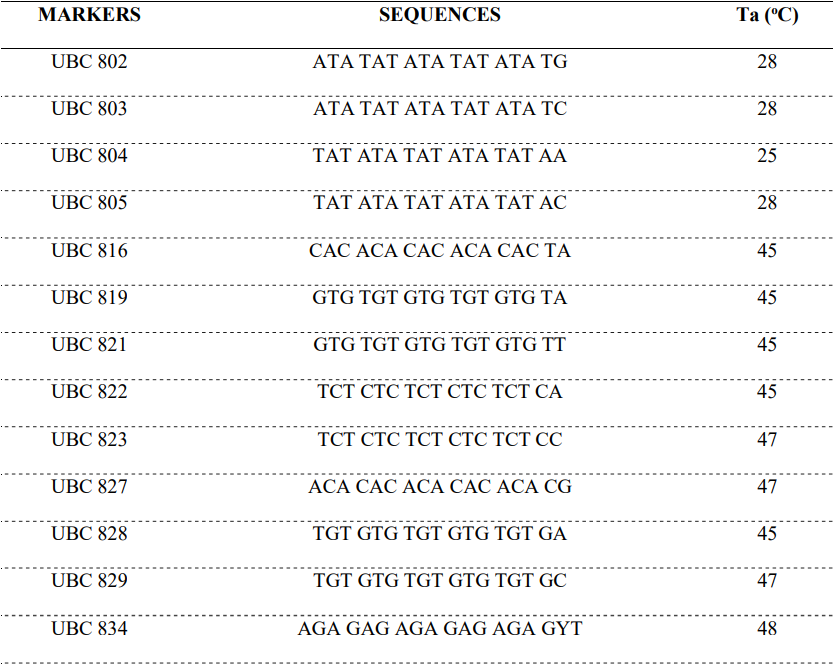
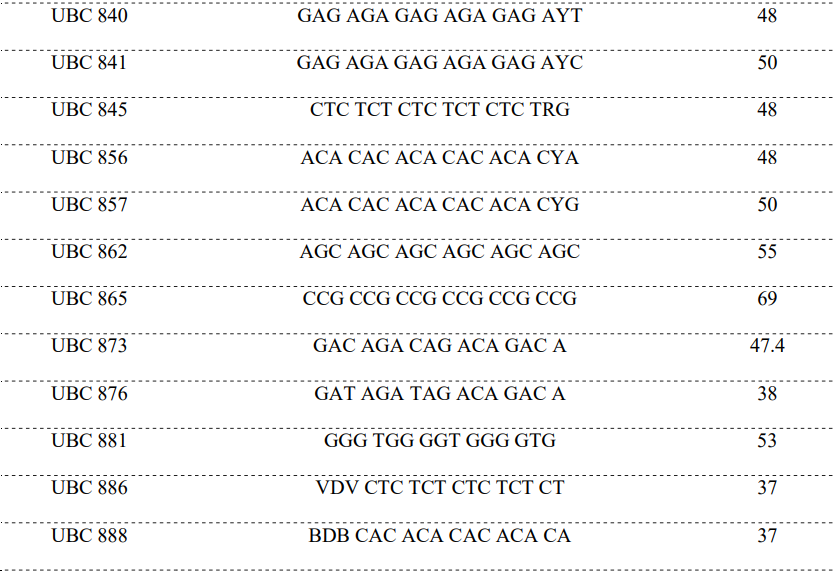
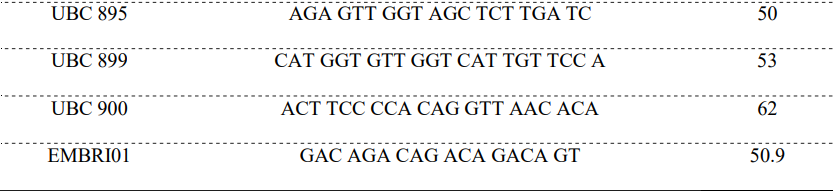
DNA was amplified via PCR using ISSR primers developed by the University of British Columbia (UBC) one ISSR primer developed by EMBRAPA Mid-North (Embr01). After optimization, each subsequent PCR was carried out in a 10:l reaction volume, under the following conditions: 1.25x [20 mM Tris-HCl, pH 8.0; 0,1 mM EDTA; 1 mM DTT; 50% glycerin], MgCl2 1.75 mM, dNTP 800 µM, 0.5 pMol of each primer, 1U de Taq DNA polymerase and 20 ng DNA sample. The PCRs were carried out in a Perkin Elmer (GeneAmp PCR System 2400™) thermocycler. The amplification protocol required an initial denaturation step of 94°C for 90 s (sec), and denaturation 94°C for 90 s for annealing 28ºC e 37ºC for 50 s, followed by 40 cycles and 2 min for extension 72°C. The final extension was performed at 72°C for 5 min, followed by 4°C storage (Table 2).
Table 2. PCR profile and reagents used for ISSR markers
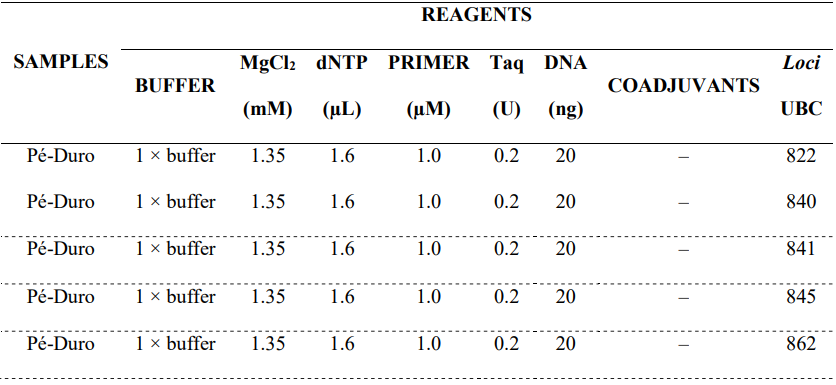
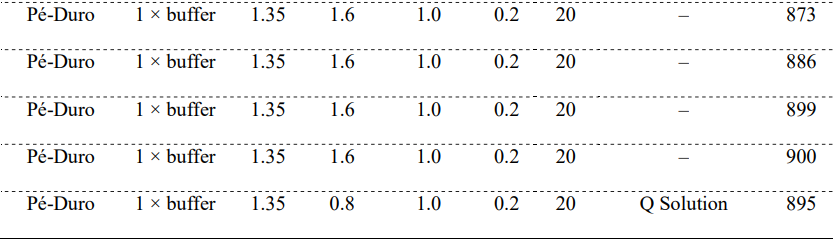
The amplified fragments were resolved in 0.8% agarose gel and visualized in GeneWizard (Syngene).
Statistics: All statistical analyses for quantitative data are presented as mean ± s.e.m. Comparison between two groups was performed using the Student’s t-test in Microsoft Excel®. For polymorphism images from agarose gel were used and length range of amplified bands was analyzed. The binary matrix was produced by the amplification products scored for the presence (1) and absence (0) of bands across the genotypes, once the standards of amplified products behave like a dominant markers.
RESULTS AND DISCUSSION
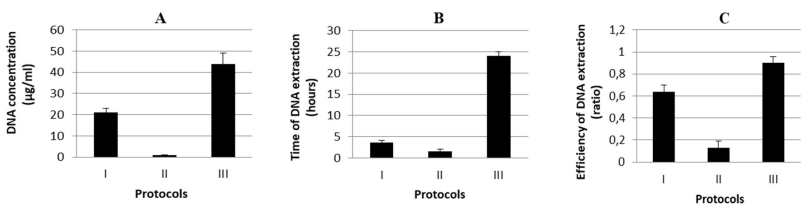
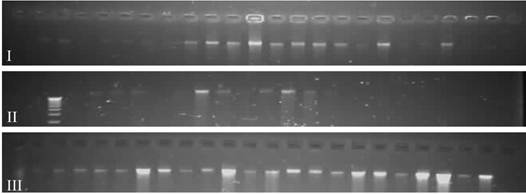
Non-invasive DNA extracted from bulb hairs: We tested three protocols for non-invasive DNA extraction, considering time, amount, and efficiency of protocol (extracted samples/total samples). Protocol I was performed using CTBA extracted good amount of DNA (Figure 3A), however most of DNA from this protocol failed to generated fragment under PCR validation.
It possible that presence of organic solvents contamination inhibited the polymerase enzyme (WALSH; METZGER; HIGUCHI, 1991). Protocol II was the faster among all (Figure 3B). In contrast, protocol III extracted the highest amounts of DNA, more than 40ug.ml-1. In addition, this protocol was the most efficient (Figure 3C).
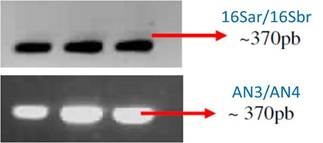
Then, we run the PCR using universal primers 16Sar/16Sbr and AN3/AN4 to check the ability of these protocols to access non-genomic DNA and their interferences in the quality of this DNA. Despite of the differences in quality of fragments (Figure 4), we found all protocols suitable to extracted mitochondrial DNA (Figure 5).
Interestingly, protocol I had significant differences for DNA extraction, it seems that CTAB can diminished integrity of mitochondrial DNA rather than protocol III (Figure 6).
Taking together these data support that protocols I and III were suitable for short period uses and analysis. However, it is necessary further investigations to ensure whether this DNA can be storage for long periods, such as years, and being used with similar yields. Next, we used protocol III to access the genetic diversity.
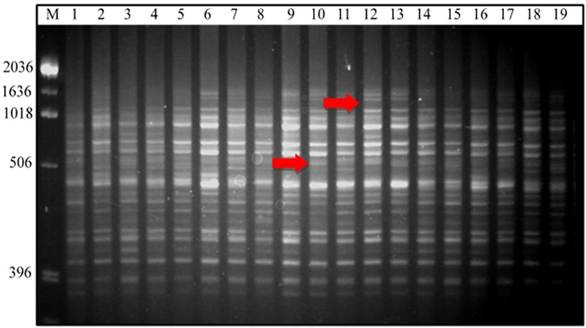
ISSR are suitable to characterize genetic diversity in Curraleiro Pé-Duro: We tested twenty-nine primers, and among them five yielded consistent and reproducible bands (Table 1). The reliability and convenience of ISSR compared to RAPD and other molecular markers rely on their potential to transcript high amount of different size of segments (ALMEIDA, 2011; CARVALHO, 2022).
Using few primers it is possible to identify variance in populations without previous genetic information. Only seventeen percent of the primers were informative for these samples, they were reproducible and, generated enough fragments to determine the relationship among the four populations and revealing that each population carries its own genetic variations. Many studies using ISSR aiming to draw the first genetic information about some species. ISSR analysis successfully generated the polymorphism in wild mammalian species, and thus it serves as an effective alternative tool or technique in the species identification (KRIANGWANICH et al., 2021).
The efficiency of ISSR is a remarkable and powerful for many areas. It is simple technique, present good reproducibility and reasonable cost, permitting its use for genetic studies for various populations (GOUDA et al., 2020; KRIANGWANICH et al., 2021). We found a total of 55 polymorphic fragments, which the size of bands varied from 300 to 1900 bases pairs (Table 3).
Table 3. Characteristics of ISSR primers selected to analysis Curraleiro Pé-Duro from Piauí, Brazil
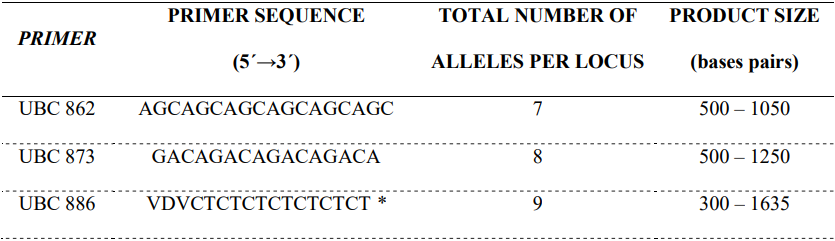

The UBC 886 generated the least number of amplified fragments, and, UBC 895 primer generated the highest number of amplified fragments. They suited the essential range for proper genetic characterization using ISSR, where the minimum and maximum amplified fragments must vary from 200 to 1500 bases pairs, respectively.
CONCLUSION
Genomic DNA extracted using a non-invasive method can be used for genetic studies. We found that adding proteinase K to the Chelex reagent yields sufficient DNA for ISSR marker access. Despite the small bovine population size and high inbreeding history, ISSR primers generated enough polymorphism to reveal distinct genetic variance among populations. Taken together, this study supports further genetic research on Curraleiro Pé-Duro and other native bovines as a step toward improving breeding and their contribution to future agriculture.
AUTHOR CONTRIBUTION
Conceptual idea: Almeida, GM; Oliveira, JA; Methodology design: Oliveira, JA; Almeida, GM; Data collection: Almeida, GM; Oliveira, JA; Data analysis and interpretation: Almeida, GM; Oliveira, JA; and Writing and editing: Oliveira, JA; Almeida, GM.
ACKNOWLEDGEMENT
The authors would like to thank the Federal University of Piauí, the Cattle Breeders Association Pé-Duro, Brazil, for donating all the samples, and all farms able to support this research.
REFERENCES
ALMEIDA, G.M. et al. O gado Pé-Duro e uso de ferramentas moleculares no melhoramento genético e conservação da raça. In: XIMENES, Luciano J.F. (Org.). Produção de bovinos no nordeste do Brasil: Desafios e resultados. 1. ed. Fortaleza: Banco do Nordeste do Brasil, v.9, 2011. p. 97-126. Disponível em: https://x.gd/j8cCG. Acesso em: 21 jul. 2025.
ARGUMEDO, A. et al. Biocultural diversity for food system transformation under global environmental change. Frontiers in Sustainable Food Systems, v.5, p. 1-9, 2021. Disponível em: http://dx.doi.org/10.3389/fsufs.2021.685299. Acesso em: 21 jul. 2025.
BARBOSA, M.C.P. et al. Performance, características de carcaça e carne de raças bovinas brasileiras adaptadas localmente em condições de confinamento. Tropical Animal Health and Production, v.55, e.243, p. 1-18, 2023. Disponível em: https://doi.org/10.1007/s11250-023-03656-7. Acesso em: 21 jul. 2025.
CARVALHO, G.M.C. et al. Phenotypic evaluation of Curraleiro Pé-Duro breed of cattle from semiarid areas of Brazil. Archivos de Zootecnia, v.62, n.237, p. 9-20, 2013. Disponível em: https://dx.doi.org/10.4321/S0004-05922013000100002. Acesso em: 21 jul. 2025.
CARVALHO, G.M.C. Distância genética de bovinos Curraleiro Pé-Duro em relação a outras raças criadas no Brasil e nos Estados Unidos avaliadas com microssatélites. Archivos Latinoamericanos de Producción Animal, v.30, n.2, p. 1-11, 2022. Disponível em: https://doi.org/10.53588/alpa.300202. Acesso em: 21 jul. 2025.
FENDERSON, L.E.; KOVACH, A.I.; LLAMAS, B. Spatiotemporal landscape genetics: Investigating ecology and evolution through space and time. Molecular Ecology, v.29, p. 2018246, 2020. Disponível em: https://doi.org/10.1111/mec.15315. Acesso em: 21 jul. 2025.
FREITAS, T.M.S. et al. Population structure of Curraleiro Pé-Duro cattle and its relationship with the serological profile against pathogens of economic and zoonotic interest. Frontiers in Genetics, v.13, p. 1-12, 2022. Disponível em: https://doi.org/10.3389/fgene.2022.872660. Acesso em: 21 jul. 2025.
GOLLIN, D. Conserving genetic resources for agriculture: economic implications of emerging science. Food Security, v.12, p. 919-927, 2020. Disponível em: https://doi.org/10.1007/s12571-020-01035-w. Acesso em: 21 jul. 2025.
GOUDA, S. et al. Wildlife forensics: A boon for species identification and conservation implications. Forensic Science International, v.137, p. 1-37, 2020. Disponível em: https://doi.org/10.1016/j.forsciint.2020.110530. Acesso em: 21 jul. 2025.
KRIANGWANICH, W. et al. Mammalian species identification using ISSR-HRM technique. Science Progress, v.104, n.2, p. 1-27, 2021. Disponível em: https://www.jstor.org/stable/27043018. Acesso em: 21 jul. 2025.
MACEDO, D.B. et al. Mutations in GDF8 gene in double-muscled cattle breeds: an overview of mechanisms of action and its relevance to livestock production. International Journal of Molecular Biology, v.8, n.1, p. 20-25, 2025. Disponível em: http://dx.doi.org/10.15406/ijmboa.2025.08.00193. Acesso em: 21 jul. 2025.
QUEIROZ, N.A.; CARVALHO, A.O.; SANTOS, S.M. Brazilian historical zooarchaeology: A summarized iberian contribution and a case study of domesticated bovine cattle introduced in southern region. Palaeoindian Archaeology, v.2, n.1, p. 7-18, 2020. Disponível em: https://journals.kvasirpublishing.com/pa/article/view/447. Acesso em: 21 jul. 2025.
TAMARI, F.; HINKLEY, C.S.; RAMPRASHAD, N. A comparison of DNA extraction methods using Petunia hybrida tissues. Journal of Biomolecular Techniques, v.24, n.3, p. 113188, 2013. Disponível em: https://doi.org/10.7171/jbt.13-2403-001. Acesso em: 21 jul. 2025.
VIEIRA, R.A. et al. Path and logistic analysis for heat tolerance in adapted breeds of cattle in Brazil. Livestock Science, v.256, e.102789, p. 1-9, 2022. Disponível em: https://doi.org/10.1016/j.livsci.2022.104888. Acesso em: 21 jul. 2025.
WALSH, P.S.; METZGER, D.A.; HIGUCHI, R. Chelex 100 as a medium for simple extraction of DNA for PCR-based typing from forensic material. Biotechniques, v.10, n.4, p. 506-513, 1991. Disponível em: https://pubmed.ncbi.nlm.nih.gov/1867860/. Acesso em: 21 jul. 2025.
¹Pd.D. in Biological Sciences – Kyoto University, Yoshida Honmachi, Sakyo-ku, Kyoto, Japan; Researcher at QIMR Berghofer, QLD Brisbane, Australia; glicia.dealmeida@qimrb.edu.au; ORCID: 0000-0003-1526-8301.
²Ph.D. in Animal Science – Federal University of Viçosa, Viçosa, Minas Gerais, Brazil; Researcher/CEO at Livestock Solutions/INEAGRO/UFPI – Teresina, Piauí, Brazil; joahsy95@gmail.com; ORCID: 0000-0001-7249-5047.