
REGISTRO DOI: 10.69849/revistaft/ma10202602130859
Jhenifer Monique Ku’s Schmitt Chagas
Abstract
Alopecia represents a significant challenge for many women, extending beyond physical hair loss to deeply affect psychological well-being, social interactions, and emotional stability. Given the symbolic role of hair in female identity and cultural perceptions of femininity, hair loss is frequently associated with reduced self-esteem, social anxiety, and diminished quality of life. This study examines the use of mega hair, including hair extensions and wigs, as a supportive tool for the reconstruction of female self-esteem in cases of alopecia. Drawing on existing academic literature, the analysis explores how cosmetic hair solutions contribute to body image restoration, emotional resilience, and social reintegration. The findings suggest that mega hair functions not merely as an aesthetic intervention but as a psychosocial coping strategy that enables women to regain a sense of control over their appearance, reduce stigma-related distress, and enhance overall well-being. While acknowledging potential limitations related to dependency and accessibility, the study highlights the relevance of integrating cosmetic approaches within broader frameworks of psychological support for women affected by alopecia.
Keywords: Alopecia; Self-esteem; Body image; Hair extensions; Psychosocial well-being; Female identity.
Hair has long been recognized as a central component of female identity, cultural expression, and social perception. For many women, hair symbolizes femininity, vitality, and personal confidence, making its loss a deeply distressing experience. Alopecia, whether resulting from autoimmune disorders, medical treatments, hormonal changes, or other etiologies, often produces psychological and social consequences that extend far beyond physical appearance. Empirical studies consistently demonstrate that women affected by alopecia experience reduced self-esteem, increased levels of anxiety and depression, and significant impairments in quality of life, particularly due to perceived changes in attractiveness and social acceptance (Cash, 2001; Hunt & McHale, 2005).
The emotional burden of alopecia is closely associated with body image disruption. Hair loss represents a visible and uncontrollable alteration of the body, challenging internalized standards of beauty and social norms. Women with alopecia frequently report feelings of embarrassment, loss of femininity, and fear of negative social evaluation, which may lead to social withdrawal and avoidance behaviors (Montgomery et al., 2017). Within this context, cosmetic interventions such as hair extensions, wigs, and hairpieces—commonly referred to as mega hair—emerge as practical tools that allow women to regain control over their appearance and mitigate the psychosocial effects of hair loss.
Although often perceived as purely aesthetic solutions, hair prostheses play a substantial role in psychological coping and emotional regulation. Research examining the psychosocial impact of wigs and extensions in individuals with alopecia indicates measurable improvements in self-esteem, social confidence, and emotional well-being following their adoption (Oliveira et al., 2024). By restoring a familiar or socially accepted appearance, mega hair facilitates the reconstruction of self-image, enabling women to reconnect with their sense of identity and personal agency. This restoration is particularly relevant in social and professional environments, where appearance strongly influences interpersonal interactions and perceived competence.
From a social psychology perspective, mega hair can be understood as a mechanism of impression management. Women with alopecia often experience heightened self-consciousness regarding their appearance, which can interfere with everyday social functioning. The use of hair extensions or wigs reduces the visibility of hair loss, decreasing the fear of stigmatization and promoting greater participation in social activities (Turner & Smith, 2014). Empirical evidence suggests that individuals who feel more secure in their appearance demonstrate reduced social anxiety and improved interpersonal engagement, reinforcing the role of cosmetic hair solutions as facilitators of social reintegration (Montgomery et al., 2017).
The emotional impact of mega hair also extends to perceptions of normalcy and autonomy. For many women, the ability to choose when and how to disclose their alopecia represents a significant psychological benefit. Rather than being defined by hair loss, women using extensions or wigs can assert control over their personal narrative, which contributes to feelings of empowerment and resilience. Studies in dermatological psychology highlight that such adaptive strategies are associated with better emotional adjustment and higher life satisfaction among individuals with visible appearance-related conditions (Hunt & McHale, 2005).
Nevertheless, the use of mega hair is not without limitations. Some women report ongoing concerns about the authenticity of their appearance or anxiety about others discovering the use of hair prostheses. Additionally, financial costs and maintenance requirements may introduce new sources of stress, particularly for those who depend on high-quality extensions to achieve a natural appearance (Oliveira et al., 2024). These findings underscore the importance of viewing mega hair not as a standalone solution but as one component of a broader psychosocial support strategy that may include counseling, peer support, and education on body image adaptation.
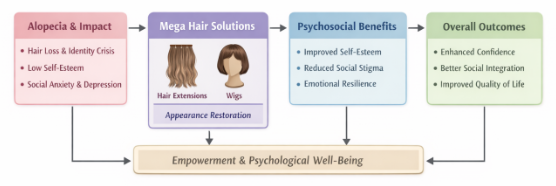
The flowchart illustrates the progressive relationship between alopecia, the use of mega hair, and the reconstruction of women’s self-esteem. It begins by highlighting the psychological and social impact of alopecia, including hair loss–related identity disruption, reduced self-esteem, and increased anxiety or depressive symptoms. The process then moves to mega hair solutions, such as hair extensions and wigs, which contribute to the restoration of physical appearance and perceived normalcy. This restoration generates psychosocial benefits, notably improved self-esteem, reduced social stigma, and enhanced emotional resilience. These intermediate effects lead to broader outcomes, including greater self-confidence, improved social integration, and higher overall quality of life. Collectively, the flowchart emphasizes that mega hair functions not only as an aesthetic resource but as a psychosocial tool that supports empowerment and psychological well-being in women experiencing alopecia.
Figure 1. The Role of Mega Hair in Rebuilding Women’s Self-Esteem in Cases of Alopecia.
Source: Created by author.
In conclusion, mega hair serves as a meaningful tool in the reconstruction of self-esteem among women experiencing alopecia by addressing the psychological, social, and emotional consequences of hair loss. Academic evidence supports its positive influence on body image, social confidence, and overall quality of life, particularly when integrated with comprehensive emotional support. Recognizing the profound connection between appearance and identity reinforces the legitimacy of cosmetic hair solutions as valuable resources in promoting mental well-being and empowering women to navigate the challenges associated with alopecia.
References
Cash, T. F. (2001). The psychology of physical appearance: Aesthetics, attributes, and images. In T. F. Cash & T. Pruzinsky (Eds.), Body Image: A Handbook of Theory, Research, and Clinical Practice. Guilford Press.
Hunt, N., & McHale, S. (2005). The psychological impact of alopecia. BMJ, 331(7522), 951–953.
Montgomery, K., White, C., & Thompson, A. (2017). A mixed-methods survey of social anxiety, anxiety, depression and wig use in alopecia. BMJ Open, 7(4), e015468.
Oliveira, M. S., Ferreira, L. M., & Santos, R. P. (2024). Wigs and alopecia areata: Psychosocial impact and economic considerations. Cosmetics, 11(2), 55.
Turner, E., & Smith, A. (2014). Can you pull it off? Appearance-modifying behaviours adopted by wig users with alopecia in social interactions. Social Psychology Review, 16(2), 45–60.