
REGISTRO DOI: 10.69849/revistaft/ra10202510060811
Leandro Mendes Machado
Abstract
The digitalization of industrial maintenance has transformed traditional approaches to asset management, particularly in the electrical domain. The integration of smart indicators, predictive analytics, and decision support systems has enabled industries to move from reactive and preventive models toward predictive and prescriptive maintenance strategies. This paradigm shift not only enhances operational efficiency but also extends equipment lifetime, reduces downtime, and strengthens safety and energy management. The purpose of this paper is to analyze how digital tools and intelligent indicators reshape the management of industrial utilities, emphasizing the interplay between predictive maintenance, data analytics, and decision-making. By reviewing recent academic literature, the article demonstrates that the successful adoption of smart indicators requires both robust technical architectures and human-centered decision support frameworks, highlighting challenges and opportunities for future advancements in the field.
Keywords: Digitalization, Electrical Maintenance, Smart Indicators, Predictive Maintenance, Industrial Utilities, Decision Support Systems
The contemporary industrial landscape is undergoing a profound transformation as digital technologies migrate from peripheral optimization projects into the core of maintenance strategy. In the domain of electrical maintenance for industrial utilities, the adoption of smart indicators—sensors, embedded analytics, and algorithmic health scores—has created the potential to shift maintenance from reactive and time-based regimes to condition-based and predictive models. This evolution is not merely technical: it alters decision heuristics, redistributes responsibilities across engineering and operations, and reframes maintenance as a strategic enabler of availability, safety, and energy efficiency. Empirical literature consistently shows that Industry 4.0 tools such as the Internet of Things, machine learning, and digital twins can improve fault detection accuracy, extend asset life, and reduce unplanned downtime (Achouch et al., 2022; Pech et al., 2021).
Smart indicators for electrical assets encompass a heterogeneous set of measurements and derived metrics: temperature and thermal gradients, partial discharge signatures, current and voltage harmonics, vibration in rotating machines, insulation resistance trends, and high-frequency transient events captured by power quality monitors. These primary data streams gain actionable value when fused with algorithms that detect anomalies and estimate remaining useful life. Condition monitoring thus becomes a layered process where raw data are contextualized with operational states and transformed into higher-level indices that feed decision systems. Predictive maintenance frameworks describe this as a recurring architecture of sensors, edge pre-processing, cloud analytics, and decision support (Short et al., 2019; Surucu et al., 2023).
The analytical backbone of these systems ranges from classical signal processing to advanced machine learning. Signal-based approaches remain crucial for electrical fault signatures, while artificial intelligence enables modeling of non-linear degradation paths. Hybrid or grey-box models, which combine physics-based knowledge with statistical inference, are gaining traction because they improve accuracy and interpretability (Falekas et al., 2021; Hector et al., 2024).
Decision-making is central to the value creation of smart indicators. Decision support systems (DSS) use indicator streams to recommend interventions, balancing failure probability, cost-risk trade-offs, and resource constraints. Studies emphasize that the integration of DSS into maintenance planning must be human-centered, ensuring transparency, interpretability, and trust from operators and engineers (Soori et al., 2024; Bousdekis et al., 2023).
Economic benefits emerge primarily from avoided downtime, extended asset life, and optimized spare parts management, while secondary benefits include energy efficiency and reliability improvements. However, barriers remain: data quality issues, interoperability challenges between heterogeneous systems, cybersecurity risks, and human factors such as resistance to change or lack of analytical expertise (Mallioris et al., 2024; Shbool et al., 2023). Literature recommends phased implementation, beginning with high-value critical assets, to maximize return on investment and accelerate organizational learning.
Future directions suggest a stronger role for digital twins and federated learning in maintenance strategies. Digital twins enable real-time simulation of equipment conditions, allowing scenario testing and proactive intervention planning, while federated learning permits cross-site collaboration without compromising data privacy. These innovations may expand the role of smart indicators from early fault detection to full lifecycle optimization of electrical assets (Falekas et al., 2021; Hector et al., 2024).
The flowchart illustrates the digitalization process of electrical maintenance by showing how smart indicators serve as the foundation for predictive maintenance, which then integrates with both decision support systems and data analytics to generate actionable insights. These elements converge to strengthen the management of industrial utilities, ultimately leading to key outcomes such as improved efficiency, enhanced reliability, cost reduction, and increased safety. This representation emphasizes the interconnected nature of technology, analytics, and decision-making in transforming maintenance into a strategic function within industrial operations.
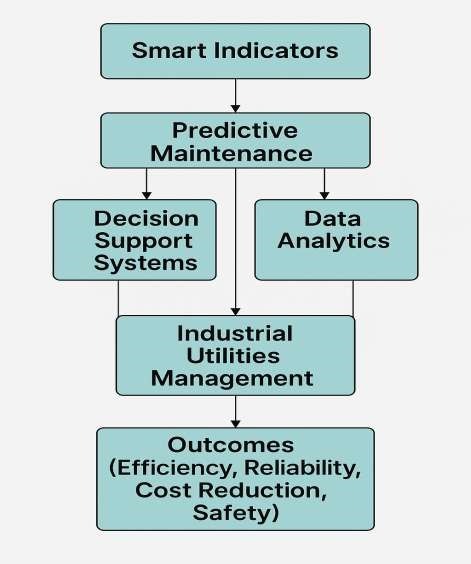
Figure 1. Digitalization of Electrical Maintenance Process for Industrial Utilities Management.
Source: Created by author.
In conclusion, the digitalization of electrical maintenance through smart indicators is reshaping the management of industrial utilities. Evidence demonstrates that sensor-driven monitoring, robust analytics, and decision support can materially reduce unplanned outages and optimize resource allocation. The long-term value, however, depends on addressing technical, organizational, and human challenges, ensuring that maintenance evolves from a cost center into a strategic capability.
References
Achouch, M., et al. (2022). On predictive maintenance in Industry 4.0: Overview, methods and challenges. Applied Sciences, 12(16), 8081.
Bousdekis, A., et al. (2023). Data analytics in Quality 4.0: Literature review and future directions. International Journal of Production Research.
Falekas, G., et al. (2021). Digital twin in electrical machine control and predictive maintenance. Conference Proceedings.
Hector, I., et al. (2024). Predictive maintenance in Industry 4.0: A survey. PLoS One, 19(2), e11157603.
Mallioris, P., et al. (2024). Predictive maintenance in Industry 4.0: A systematic multi-sector review. Journal of Manufacturing Systems.
Pech, M., et al. (2021). Predictive maintenance and intelligent sensors in smart factories. Sensors, 21(3), 7923427.
Shbool, M. A., et al. (2023). Application of condition-based maintenance for electrical systems. Energy Reports, 9, 10491639.
Short, M., et al. (2019). An industrial digitalization platform for condition monitoring. Sensors, 19(17), 3781.
Soori, M., et al. (2024). AI-based decision support systems in Industry 4.0: A review. Computers & Industrial Engineering, 185, 110653.
Surucu, O., et al. (2023). Condition monitoring using machine learning: A review. Expert Systems with Applications, 225, 120136.
SANTOS,Hugo;PESSOA,EliomarGotardi.Impactsofdigitalizationontheefficiencyandqu alityofpublicservices:Acomprehensiveanalysis.LUMENETVIRTUS,[S.l.],v.15,n.40,p.4 4094414,2024.DOI:10.56238/levv15n40024.Disponívelem:https://periodicos.newscienc epubl.com/LEV/article/view/452.Acessoem:25jan.2025.
Freitas,G.B.,Rabelo,E.M.,&Pessoa,E.G.(2023).Projetomodularcomreaproveitamentodec ontainermaritimo.BrazilianJournalofDevelopment,9(10),28303–28339.https://doi.org/10.34117/bjdv9n10057
Freitas,G.B.,Rabelo,E.M.,&Pessoa,E.G.(2023).Projetomodularcomreaproveitamentodec ontainermaritimo.BrazilianJournalofDevelopment,9(10),28303–28339.https://doi.org/10.34117/bjdv9n10057
Pessoa,E.G.,Feitosa,L.M.,ePadua,V.P.,&Pereira,A.G.(2023).Estudodosrecalquesprimári osemumaterroexecutadosobreaargilamoledoSarapuí.BrazilianJournalofDevelopment,9(10),28352–28375.https://doi.org/10.34117/bjdv9n10059
PESSOA,E.G.;FEITOSA,L.M.;PEREIRA,A.G.;EPADUA,V.P.Efeitosdeespéciesdealnaficiênciadecoagulação,Alresidualepropriedadedosflocosnotratamentodeáguassuperficia is.BrazilianJournalofHealthReview,[S.l.],v.6,n.5,p.2481424826,2023.DOI:10.34119/bjh rv6n5523.Disponívelem:https://ojs.brazilianjournals.com.br/ojs/index.php/BJHR/article/ view/63890.Acessoem:25jan.2025.
SANTOS,Hugo;PESSOA,EliomarGotardi.Impactsofdigitalizationontheefficiencyandqu alityofpublicservices:Acomprehensiveanalysis.LUMENETVIRTUS,[S.l.],v.15,n.40,p.4 4094414,2024.DOI:10.56238/levv15n40024.Disponívelem:https://periodicos.newscienc epubl.com/LEV/article/view/452.Acessoem:25jan.2025.
Filho, W. L. R. (2025). The Role of Zero Trust Architecture in Modern Cybersecurity: Integration with IAM and Emerging Technologies. Brazilian Journal of Development, 11(1), e76836. https://doi.org/10.34117/bjdv11n1-060
Oliveira, C. E. C. de. (2025). Gentrification, urban revitalization, and social equity: challenges and solutions. Brazilian Journal of Development, 11(2), e77293. https://doi.org/10.34117/bjdv11n2–010
Pessoa, E. G. (2024). Pavimentos permeáveis uma solução sustentável. Revista Sistemática, 14(3), 594–599. https://doi.org/10.56238/rcsv14n3-012
Filho, W. L. R. (2025). THE ROLE OF AI IN ENHANCING IDENTITY AND ACCESS MANAGEMENT SYSTEMS. International Seven Journal of Multidisciplinary, 1(2). https://doi.org/10.56238/isevmjv1n2-011
Antonio, S. L. (2025). Technological innovations and geomechanical challenges in Midland Basin Drilling. Brazilian Journal of Development, 11(3), e78097. https://doi.org/10.34117/bjdv11n3-005
Pessoa, E. G. (2024). Pavimentos permeáveis uma solução sustentável. Revista Sistemática, 14(3), 594–599. https://doi.org/10.56238/rcsv14n3-012
Pessoa, E. G. (2024). Pavimentos permeáveis uma solução sustentável. Revista Sistemática, 14(3), 594–599. https://doi.org/10.56238/rcsv14n3–012
Eliomar Gotardi Pessoa, & Coautora: Glaucia Brandão Freitas. (2022). ANÁLISE DE CUSTO DE PAVIMENTOS PERMEÁVEIS EM BLOCO DE CONCRETO UTILIZANDO BIM (BUILDING INFORMATION MODELING). Revistaft, 26(111),86. https://doi.org/10.5281/zenodo.10022486
Eliomar Gotardi Pessoa, Gabriel Seixas Pinto Azevedo Benittez, Nathalia Pizzol de Oliveira, & Vitor Borges Ferreira Leite. (2022). ANÁLISE COMPARATIVA ENTRE RESULTADOS EXPERIMENTAIS E TEÓRICOS DE UMA ESTACA COM CARGA HORIZONTAL APLICADA NO TOPO. Revistaft, 27(119), 67. https://doi.org/10.5281/zenodo.7626667
Eliomar Gotardi Pessoa, & Coautora: Glaucia Brandão Freitas. (2022). ANÁLISE COMPARATIVA ENTRE RESULTADOS TEÓRICOS DA DEFLEXÃO DE UMA LAJE PLANA COM CARGA DISTRIBUÍDA PELO MÉTODO DE EQUAÇÃO DE DIFERENCIAL DE LAGRANGE POR SÉRIE DE FOURIER DUPLA E MODELAGEM NUMÉRICA PELO SOFTWARE SAP2000. Revistaft, 26(111),43. https://doi.org/10.5281/zenodo.10019943
Pessoa, E. G. (2025). Optimizing helical pile foundations: a comprehensive study on displaced soil volume and group behavior. Brazilian Journal of Development, 11(4), e79278. https://doi.org/10.34117/bjdv11n4–047
Pessoa, E. G. (2025). Utilizing recycled construction and demolition waste in permeable pavements for sustainable urban infrastructure. Brazilian Journal of Development, 11(4), e79277. https://doi.org/10.34117/bjdv11n4–046
Testoni, F. O. (2025). Niche accounting firms and the brazilian immigrant community in the U.S.: a study of cultural specialization and inclusive growth. Brazilian Journal of Development, 11(5), e79627. https://doi.org/10.34117/bjdv11n5-034
Silva, J. F. (2025). Desafios e barreiras jurídicas para o acesso à inclusão de crianças autistas em ambientes educacionais e comerciais. Brazilian Journal of Development, 11(5), e79489. https://doi.org/10.34117/bjdv11n5-011